How Long Does a Thread Lift Last? Two Critical Factors Decide It
- Thread lifts often relapse within months because superficial threads cannot release the deep retaining ligaments tethering facial tissues.
- Mild early laxity with minimal excess skin responds well to threads, whereas moderate-to-severe jowling requires SMAS release and skin redraping.
- Prior thread lift scar tissue can be safely cleared during a deep-plane facelift when performed in the proper anatomical plane.
During thread lift consultations, the question I hear most often is:
"How long will a thread lift really last?"
Even under the single name "thread lift," longevity varies dramatically from patient to patient. Ultimately, that difference comes down to two decisive factors: ① the 3D architecture of the thread, and ② the gravitational weight of the facial tissues.
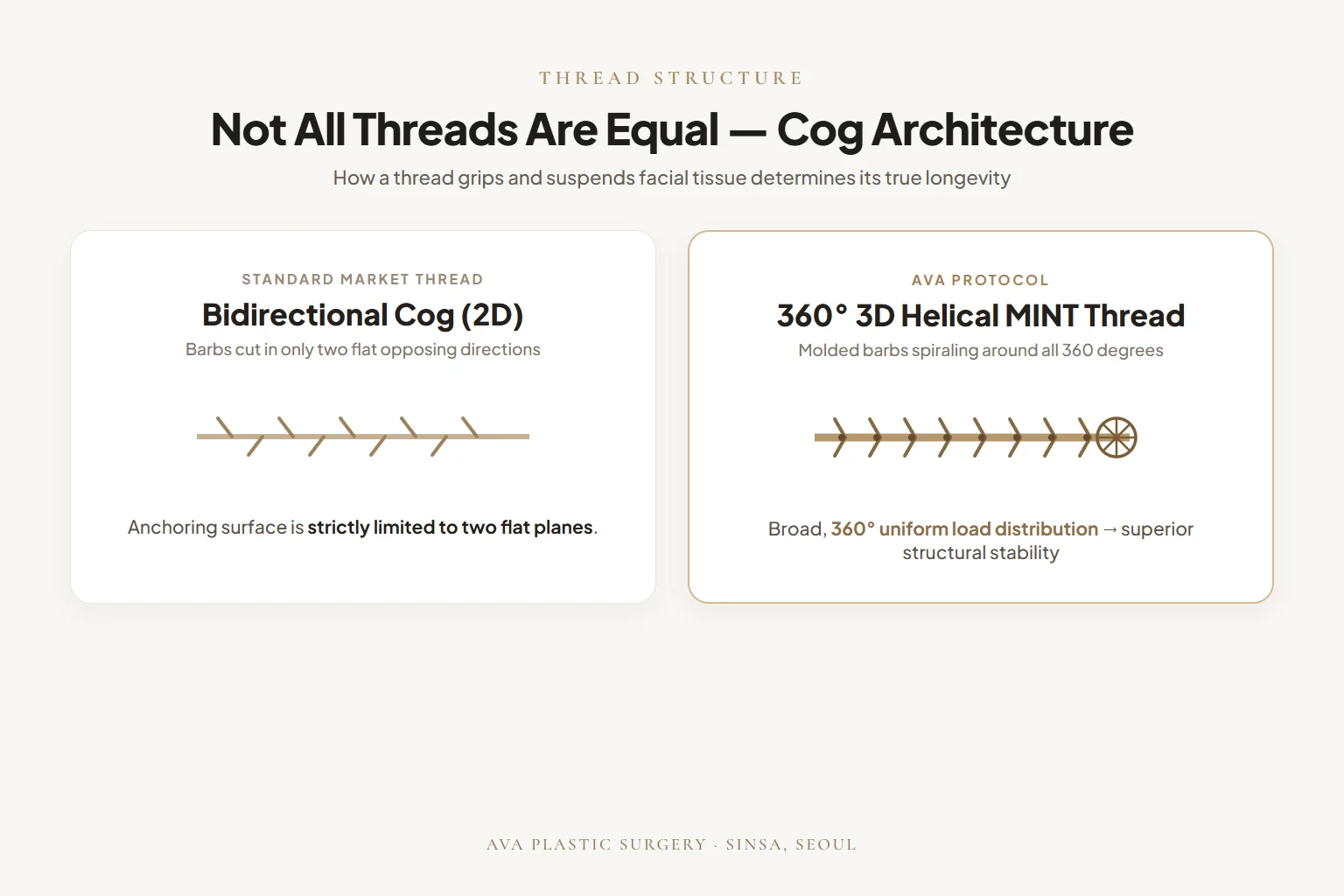
① Thread Architecture Transforms Anchoring Strength
Standard bidirectional cog threads feature barbs cut in only two flat opposing directions (2D), confining their grip to two narrow planes. At AVA Plastic Surgery, we utilize 360-degree 3D helical MINT threads whose molded barbs spiral around the entire circumference of the thread. This distributes traction evenly across 360 degrees, preventing concentrated pull on a single axis and providing far firmer structural suspension.

② Thin, Lightweight Facial Tissue — When Threads Alone Excel
For patients with thin skin and minimal heaviness in the cheeks and jowls, the physical load suspended by the threads is light. In these candidates, thread lifting alone reliably maintains its visible contour improvement for over a year.
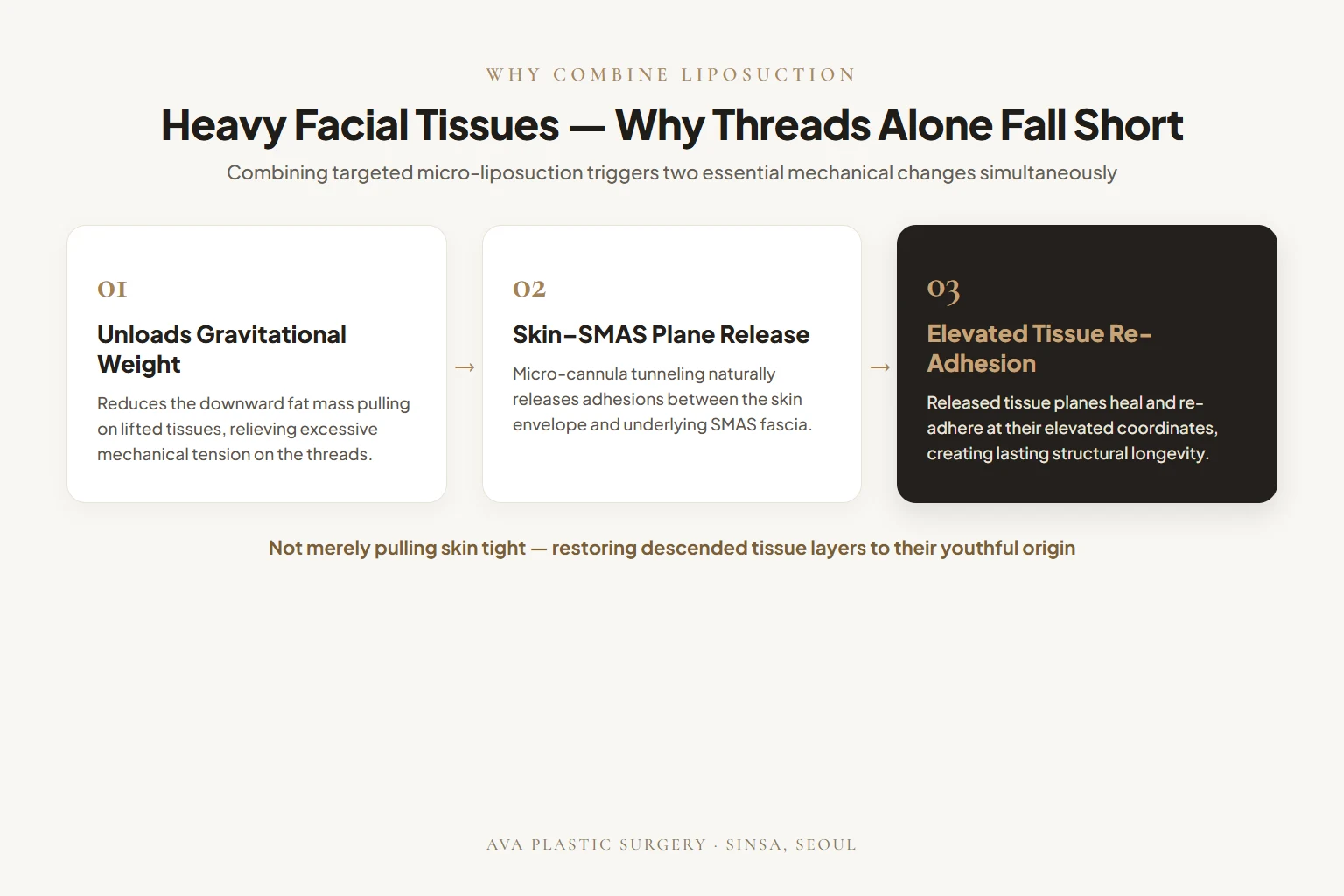
③ Heavy, Full Facial Tissue — Why Combining Micro-Liposuction Is Key
Conversely, in faces with heavier buccal or jowl fat pads, gravity continuously pulls that weight downward. In these cases, I recommend combining thread lifting with targeted facial micro-liposuction for two anatomical reasons:
- Unloading Downward Mass: Removing excess subcutaneous fat reduces the gravitational drag pulling against the threads.
- Skin–SMAS Plane Release & Re-Adhesion: Gentle micro-cannula tunneling separates the skin envelope from the underlying SMAS fascia. When lifted by threads, these released planes heal and re-adhere in their elevated position—creating biological plane fixation that lasts far longer than thread tension alone.

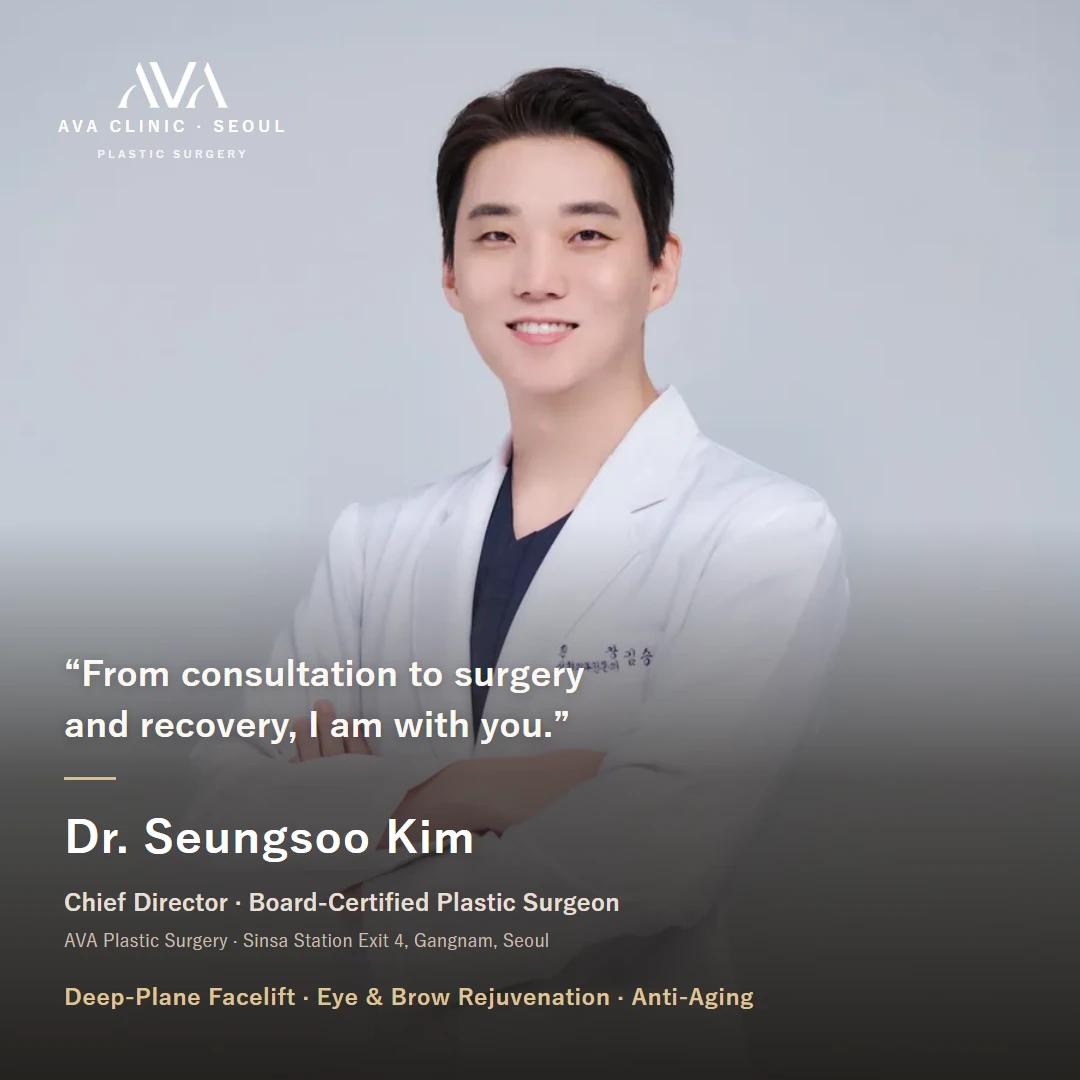
Book Your 1:1 Consultation with Dr. Seungsoo Kim
Whether you are flying in from overseas or living in Korea, Dr. Seungsoo Kim personally oversees every step from initial consultation to surgery and recovery:
- 📅 Book a 1:1 Zoom Video Pre-Consultation or Seoul Clinic Visit (English Booking Hub) →
- 📖 Read Dr. Kim's Mother's Deep-Plane Facelift & Eyelid Surgery 2-Month Recovery Log →
- ✨ View Deep-Plane Facelift Guide & 1-Year Follow-Up Cases →
- 👁️ View Upper Eyelid, Sub-Brow & Forehead Lift Guide →
- 💬 Chat Directly on WhatsApp (+82 10-3705-3423) →
📍 AVA Plastic Surgery · 4F Insung Building, 603 Gangnam-daero, Seocho-gu, Seoul (1-min walk from Sinsa Station Exit 4) · TEL +82 2-545-1882
※ Surgical & Consultation Notice: 1:1 Zoom video consultations provide a preliminary educational assessment; final surgical candidacy and operative plans are confirmed through an in-person clinical examination by Dr. Seungsoo Kim in Seoul. Post-operative complications such as bleeding, infection, swelling, scarring, asymmetry, or sensory changes may occur, and results and recovery vary by individual.
Frequently Asked Clinical Questions (FAQ)
Q. Why do thread lift results often fade after 6 to 12 months?
Without surgically releasing the zygomatic and mandibular retaining ligaments, superficial barbed threads bear constant downward tension from facial movement and gravity, causing the tissue to slide back.
Q. Can I still get a deep-plane facelift if I previously had thread lifts?
Yes. During deep-plane dissection, Dr. Kim carefully releases fibrotic bands or residual threads and repositions the underlying SMAS layer safely.
Q. When is a thread lift still a reasonable option?
For patients in their late 20s to early 40s with mild soft-tissue descent, good skin elasticity, and minimal excess skin who want a brief recovery without incisions.
Read the original Naver blog post ·
Recommended Related Columns by Dr. Seungsoo Kim
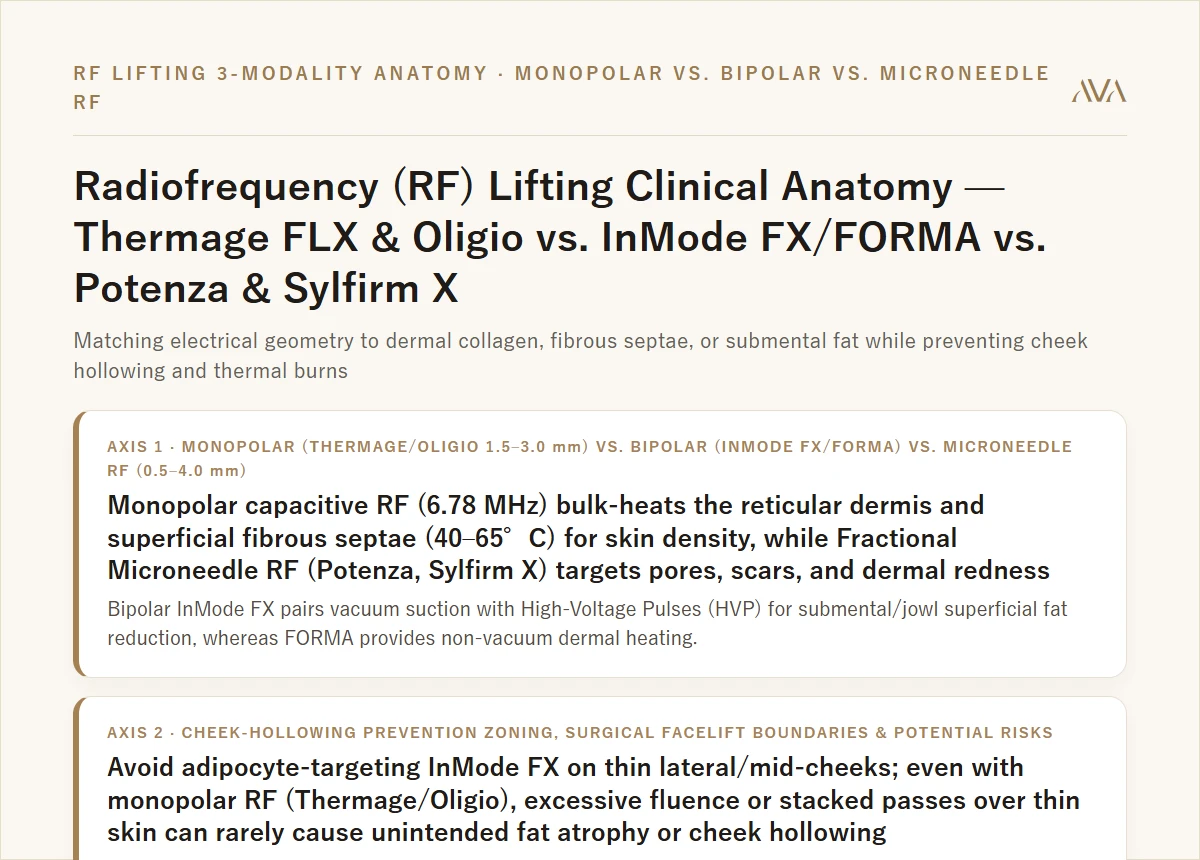
Radiofrequency (RF) Lifting Anatomy — Thermage FLX & Oligio vs. InMode FX/FORMA vs. Microneedle RF
Read article →
Ultherapy vs. Thermage FLX — Different Anatomical Depths, Different Jobs
Read article →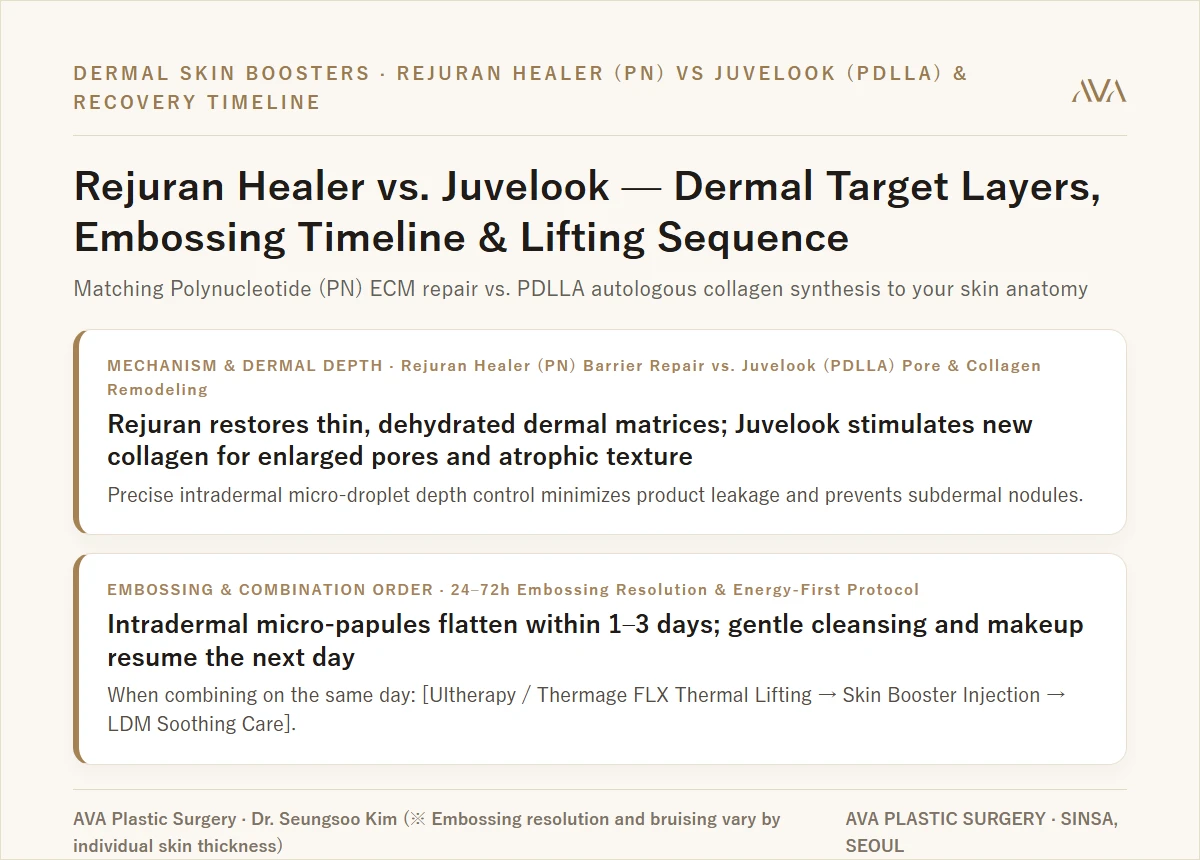
Rejuran Healer (PN) vs. Juvelook (PDLLA) in Seoul — Dermal Target Layers, Embossing Timeline & Lifting Sequence
Read article →