Ultherapy vs. Thermage FLX — Different Anatomical Depths, Different Jobs
- Ultherapy (micro-focused ultrasound) targets the deeper SMAS fascia for lifting, whereas Thermage (monopolar RF) heats the dermis to tighten skin texture and elasticity.
- Energy-based devices cannot remove excess skin or surgically release retaining ligaments when moderate-to-severe sagging is present.
- Matching your facial fat volume, skin thickness, and degree of laxity determines whether energy devices, thread lifting, or surgical lifting is right for you.
Patients frequently ask us to pick "the better energy device" between Ultherapy and Thermage. In truth, they are not competing products—they target completely different anatomical depths to solve different aging concerns.
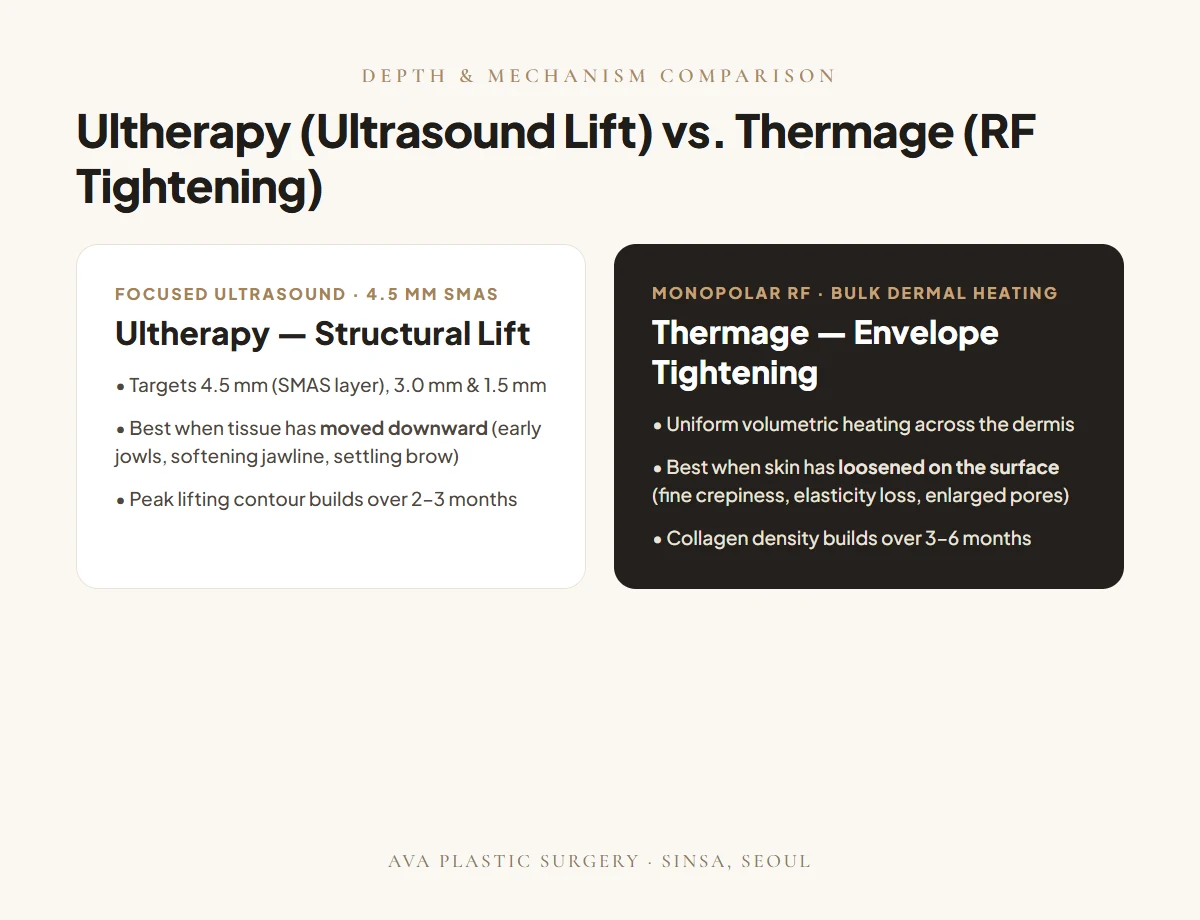
Ultherapy: Focused Ultrasound Delivered to the 4.5 mm SMAS Layer
Ultherapy uses micro-focused ultrasound with real-time visualization to create precise thermal coagulation points at 4.5 mm (the SMAS fascia—the exact structural layer repositioned in a facelift), 3.0 mm (deep dermis), and 1.5 mm. Because it contracts the SMAS layer, Ultherapy is the non-surgical choice for positional sagging: a softening jawline, early jowling, or mild brow descent.
Thermage FLX: Monopolar Radiofrequency Delivered to the Dermis
Thermage FLX uses volumetric monopolar radiofrequency to heat the entire dermal collagen matrix evenly from 1.5 to 3.0 mm depth. Its target is skin envelope quality: fine crepiness, enlarged pores, and thin, slackened surface skin that has lost its bounce.
Which One Suits Your Face?
- Tissue has moved downward (early jowls, heavy lower cheek, mild brow drop): Choose Ultherapy.
- Skin surface has loosened (thin, crepey skin, fine lines, loss of dermal density): Choose Thermage FLX.
- Both concerns in a patient not yet ready for surgery: Combining Ultherapy (for deep SMAS support) with Thermage (for dermal tightening) delivers synergistic multi-layer rejuvenation.
Where Non-Surgical Energy Stops — And Surgical Lifting Begins
Energy devices contract existing collagen; they cannot release stretched retaining ligaments or move a heavy cheek fat pad back a full centimeter. If the improvement you want in the mirror only appears when you lift your jawline firmly with your fingers, a mini facelift or deep-plane facelift is the honest, more cost-effective answer—and we will tell you so candidly during consultation.
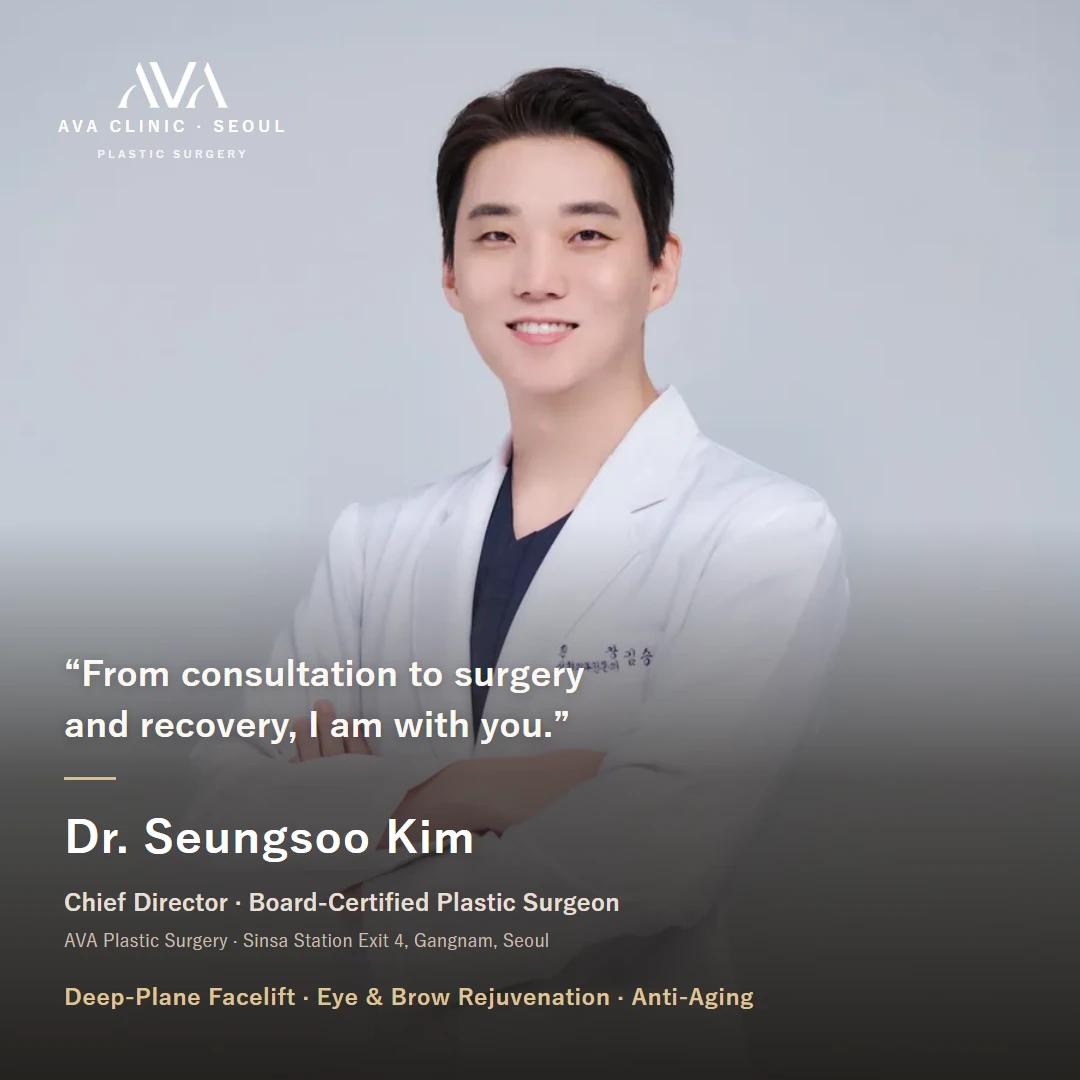
Book Your 1:1 Consultation with Dr. Seungsoo Kim
Whether you are flying in from overseas or living in Korea, Dr. Seungsoo Kim personally oversees every step from initial consultation to surgery and recovery:
- 📅 Book a 1:1 Zoom Video Pre-Consultation or Seoul Clinic Visit (English Booking Hub) →
- 📖 Read Dr. Kim's Mother's Deep-Plane Facelift & Eyelid Surgery 2-Month Recovery Log →
- ✨ View Deep-Plane Facelift Guide & 1-Year Follow-Up Cases →
- 👁️ View Upper Eyelid, Sub-Brow & Forehead Lift Guide →
- 💬 Chat Directly on WhatsApp (+82 10-3705-3423) →
📍 AVA Plastic Surgery · 4F Insung Building, 603 Gangnam-daero, Seocho-gu, Seoul (1-min walk from Sinsa Station Exit 4) · TEL +82 2-545-1882
※ Surgical & Consultation Notice: 1:1 Zoom video consultations provide a preliminary educational assessment; final surgical candidacy and operative plans are confirmed through an in-person clinical examination by Dr. Seungsoo Kim in Seoul. Post-operative complications such as bleeding, infection, swelling, scarring, asymmetry, or sensory changes may occur, and results and recovery vary by individual.
Frequently Asked Clinical Questions (FAQ)
Q. Should I choose Ultherapy or Thermage for facial sagging?
Ultherapy is better suited for patients with fuller lower-face soft tissue seeking deeper SMAS contraction, while Thermage is preferred for thin-skinned patients with fine crepiness and dermal laxity who want to avoid volume loss.
Q. When do energy devices like Ultherapy and Thermage reach their limit?
Once true skin redundancy, deep jowls, and ligament laxity develop, heat-induced collagen contraction cannot replace surgical ligament release and skin excision in a deep-plane facelift.
Q. Does having previous Ultherapy or Thermage prevent me from getting a facelift later?
No, you can still undergo a facelift, though we recommend waiting at least 6 months after high-energy ultrasound or RF treatments before surgical dissection.
Recommended Related Columns by Dr. Seungsoo Kim
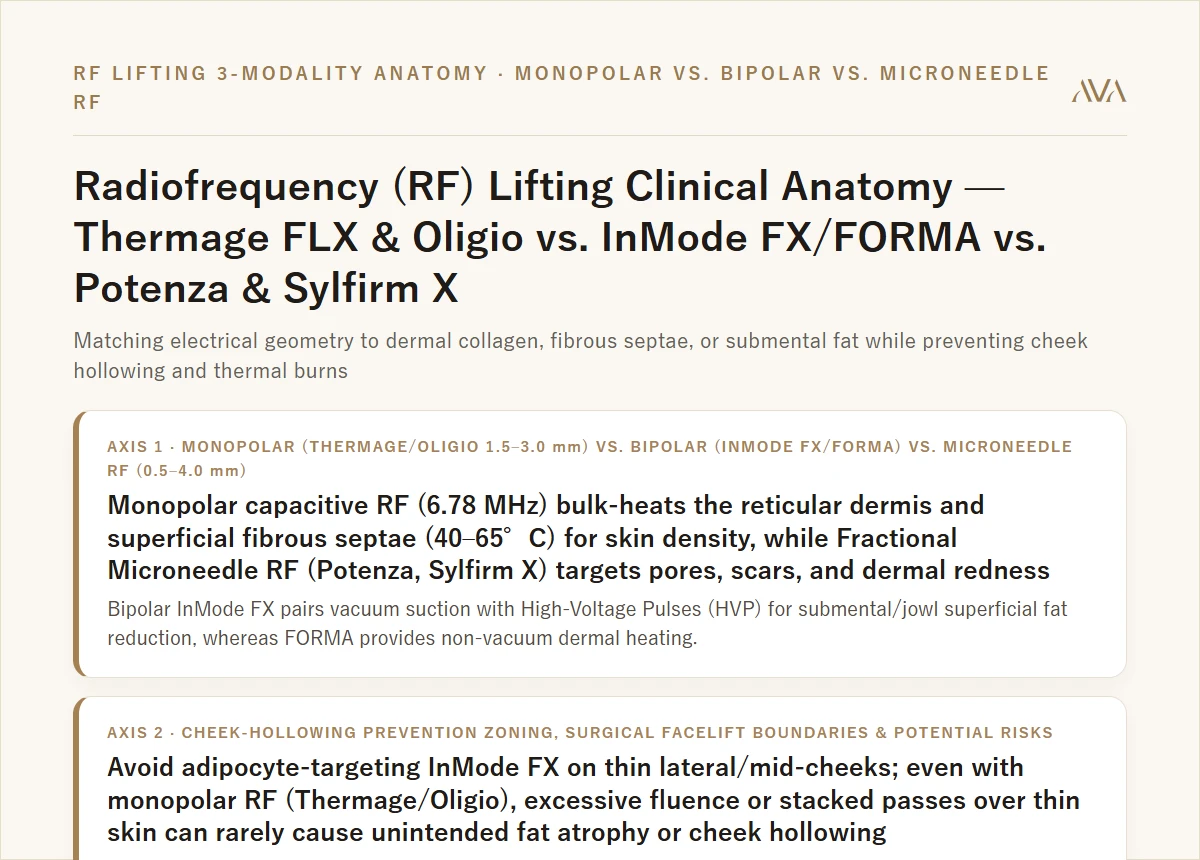
Radiofrequency (RF) Lifting Anatomy — Thermage FLX & Oligio vs. InMode FX/FORMA vs. Microneedle RF
Read article →
How Long Does a Thread Lift Last? Two Critical Factors Decide It
Read article →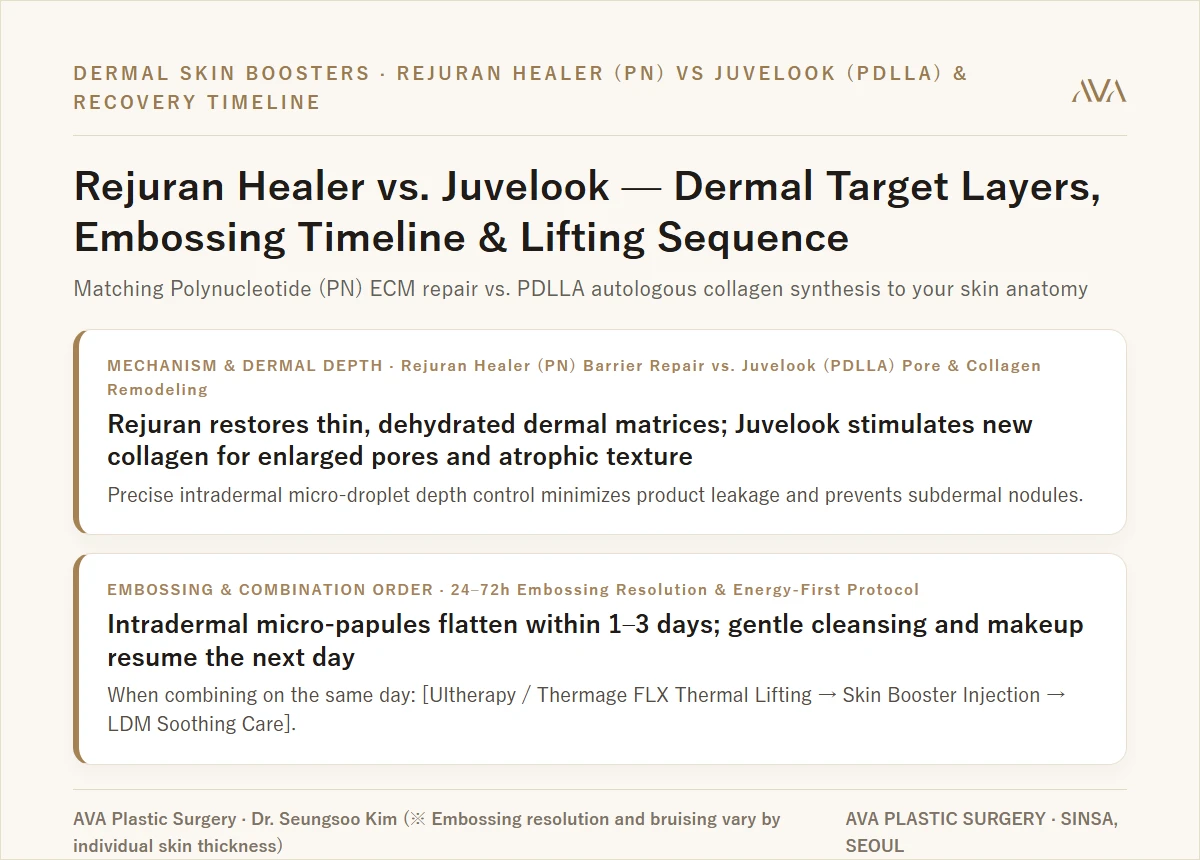
Rejuran Healer (PN) vs. Juvelook (PDLLA) in Seoul — Dermal Target Layers, Embossing Timeline & Lifting Sequence
Read article →