Under-Eye Fat Repositioning 101: Benefits, Transconjunctival Technique, Recovery & Precautions
- Under-eye fat repositioning moves herniated orbital fat across the infraorbital rim to fill the hollow tear trough rather than simply removing fat.
- Releasing the tight tear-trough ligament and reinforcing the orbital septum prevents both hollowness and early recurrence.
- Performed through a hidden transconjunctival (inner eyelid) incision, it leaves zero external skin scar and allows rapid recovery.
Hello, I am Dr. Seungsoo Kim, Director and Board-Certified Plastic Surgeon at AVA Plastic Surgery in Sinsa, Seoul.
For patients troubled by tired-looking, puffy under-eye bags or persistent dark shadows, under-eye fat repositioning is one of the most rewarding procedures we perform. Today, I will walk you through its anatomical principles, ideal candidates, surgical technique, recovery timeline, and key precautions.
What Is Under-Eye Fat Repositioning?
As we age, the orbital septum—the fibrous membrane holding intraorbital fat in place—gradually weakens. Fat herniates forward to form a bulge while casting a deep tear-trough shadow directly beneath it. Rather than discarding this valuable fat, under-eye fat repositioning redistributes it downward into the sunken tear trough, simultaneously flattening the bag and cushioning the hollow.
Because the procedure is performed via a transconjunctival approach (through the inner lining of the lower eyelid), there are no external skin incisions, no surface sutures, and no visible scars.

Who Is an Ideal Candidate?
- Patients whose protruding under-eye bags create a chronically tired or aged expression
- Patients with both under-eye puffiness and sunken, shadowed tear troughs
- Patients with good lower-lid skin elasticity who want scarless rejuvenation (patients with significant loose skin are better suited for lower blepharoplasty)
Surgical Technique & Recovery Timeline
Herniated orbital fat pads are delicately mobilized after releasing the tethered tear trough ligament and secured across the sub-orbital hollow to create a smooth transition from the lower lid to the mid-cheek.

- Swelling & Bruising: Major swelling subsides within 1 to 2 weeks, with fine tissue settling continuing over the following months.
- Daily Routine: Most patients return to normal daily activities within a few days, with no external stitches to remove.
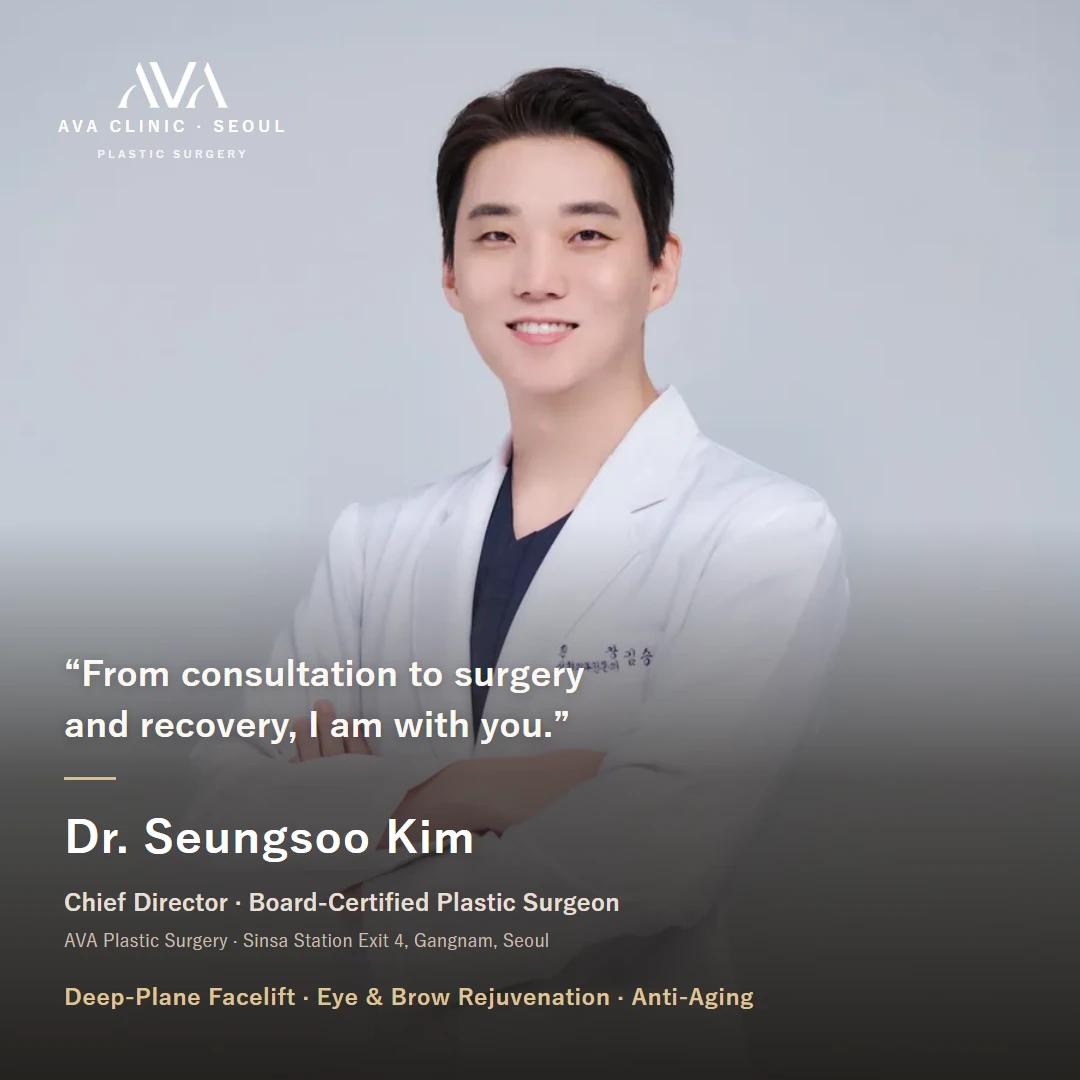
Book Your 1:1 Consultation with Dr. Seungsoo Kim
Whether you are flying in from overseas or living in Korea, Dr. Seungsoo Kim personally oversees every step from initial consultation to surgery and recovery:
- 📅 Book a 1:1 Zoom Video Pre-Consultation or Seoul Clinic Visit (English Booking Hub) →
- 📖 Read Dr. Kim's Mother's Deep-Plane Facelift & Eyelid Surgery 2-Month Recovery Log →
- ✨ View Deep-Plane Facelift Guide & 1-Year Follow-Up Cases →
- 👁️ View Upper Eyelid, Sub-Brow & Forehead Lift Guide →
- 💬 Chat Directly on WhatsApp (+82 10-3705-3423) →
📍 AVA Plastic Surgery · 4F Insung Building, 603 Gangnam-daero, Seocho-gu, Seoul (1-min walk from Sinsa Station Exit 4) · TEL +82 2-545-1882
※ Surgical & Consultation Notice: 1:1 Zoom video consultations provide a preliminary educational assessment; final surgical candidacy and operative plans are confirmed through an in-person clinical examination by Dr. Seungsoo Kim in Seoul. Post-operative complications such as bleeding, infection, swelling, scarring, asymmetry, or sensory changes may occur, and results and recovery vary by individual.
Frequently Asked Clinical Questions (FAQ)
Q. Why is fat repositioning preferred over simple under-eye fat removal?
Removing orbital fat alone often leaves a sunken, tired hollow beneath the eye and does not erase the tear-trough groove. Repositioning uses your own fat pedicle to smooth the transition from lid to cheek.
Q. Why must the tear-trough ligament be released during surgery?
The tear-trough ligament tethers the skin directly to the maxilla. Unless it is surgically released, the deep crease remains visible even after fat is moved.
Q. Are there any external stitches to remove after transconjunctival fat repositioning?
No external skin stitches are required because the approach is entirely inside the lower eyelid conjunctiva, and most patients resume normal routines within 5 to 7 days.
Read the original Naver blog post ·
Recommended Related Columns by Dr. Seungsoo Kim

Upper Blepharoplasty, Sub-Brow Lift, Forehead Lift & Double Eyelid: Which Combination Fits Your Eyes?
Read article →
Why Do Eyes Droop from the Outside First? Lateral Hooding and the Sub-Brow Lift
Read article →
Lower Blepharoplasty vs. Under-Eye Fat Repositioning — Why the Mid-30s Is the Dividing Line
Read article →